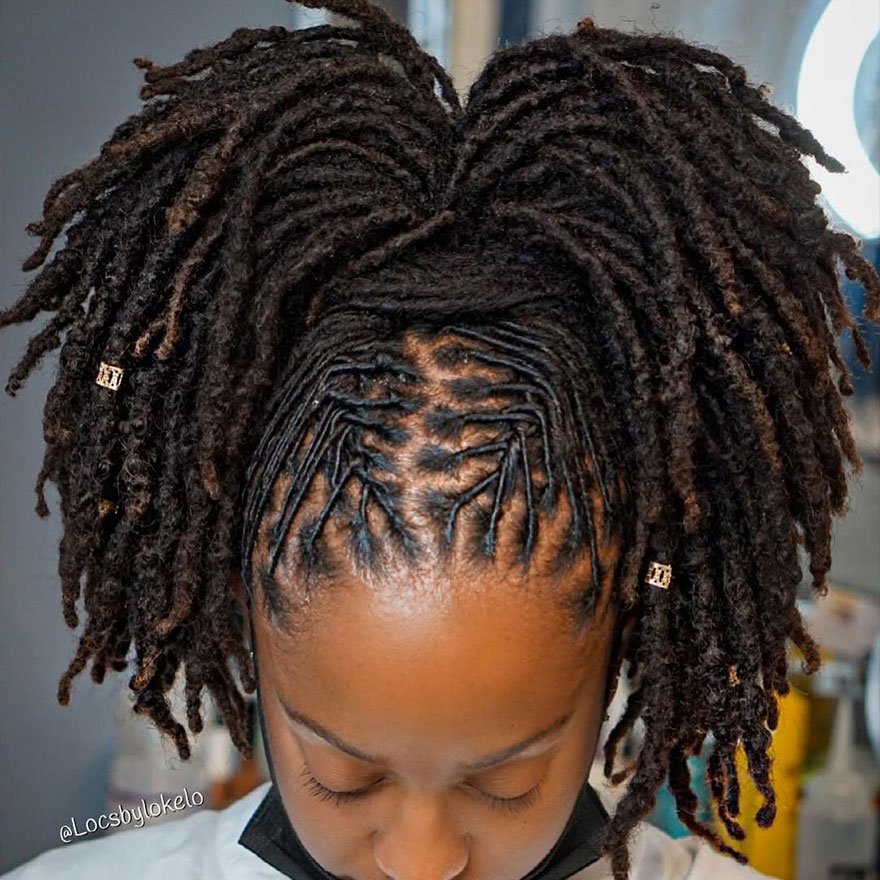
Credit Instagram – @locsbylokelo
If you’ve had your locs for four years, you’ve invested time, patience, and emotion into them. But sometimes you’re ready for a change without doing a big chop.
Here’s the good news:
Yes, you can comb out 4-year-old locs without destroying your hair.
No, you cannot rush it—speed almost always leads to breakage, thinning, and regret.
This complete guide explains how to take down mature locs safely, what tools you need, how long it takes, and what to expect afterward.
How to Comb Out 4-Year-Old Locs Without Damage
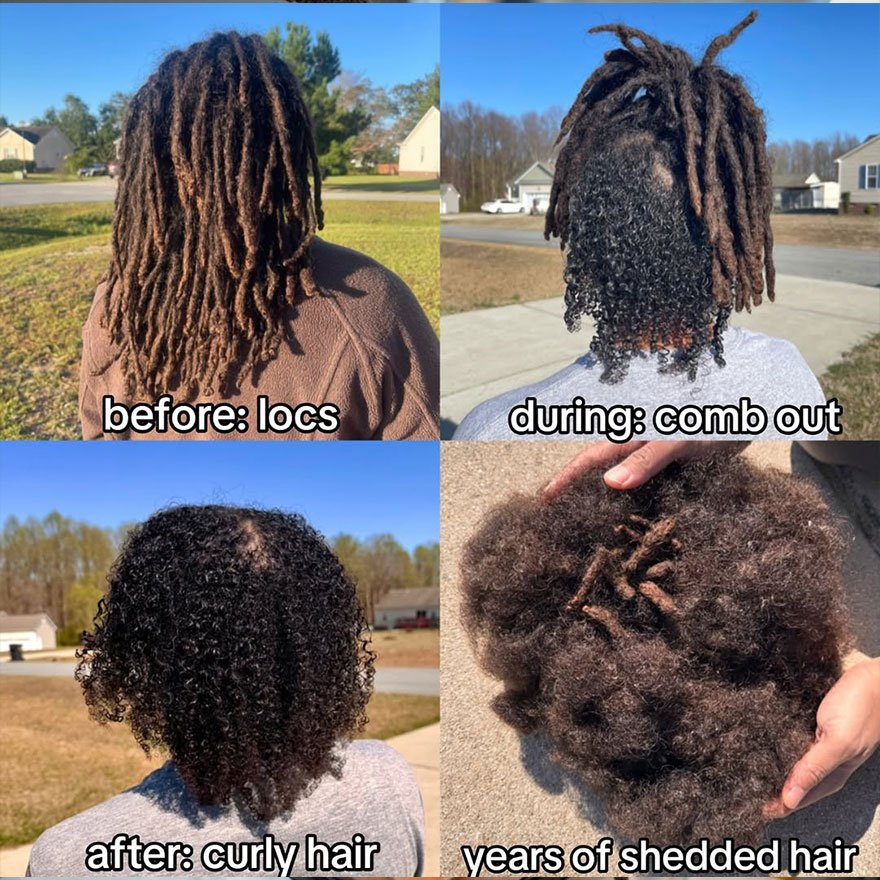
Credit Instagram – @killinitkammy
To safely remove 4-year-old locs without damage:
- Clarify and deep-condition your locs to soften them.
- Soak each loc with warm water and conditioner.
- Work one loc at a time, starting from the tip, not the root.
- Use a rat-tail comb or small brush to gently loosen hair.
- Keep each loc wet and saturated with slip (conditioner, oil, or detangler).
- Remove shed hair gently with your fingers.
- After all locs are removed, detangle, trim, and deep-condition again.
Done correctly, you’ll lose some length (normal) but avoid severe breakage.
Is It Really Possible to Comb Out 4-Year-Old Locs?
Yes—but only if you’re patient.
Here’s the reality:
- It is time-consuming: expect several hours to a few days.
- You’ll see a lot of shed hair—normal after 4 years of buildup.
- Your ends may look thin or uneven, so trimming is expected.
You should not attempt a comb-out if:
- Your hair is weak or breaking
- Your locs have rock-hard, packed-in buildup
- You’re impatient and tend to rush
- Your hair is chemically damaged (bleach, relaxer, etc.)
If you can work slowly and gently, this method works extremely well.
What You’ll Need (Essential Tools)
Before you start, gather:
- Clarifying shampoo
- Thick, slippery conditioner or deep conditioner
- Detangling spray or leave-in conditioner
- Oils (olive, coconut, almond, etc.)
- Rat-tail comb and/or small detangling brush
- Spray bottle (warm water + conditioner + a little oil)
- Hair clips or ties
- Towels + old T-shirt
- Patience, snacks, and something to watch
Step 1: Prep Your Locs Before You Start
Preparation prevents breakage.
1. Clarify your locs
- Shampoo thoroughly to remove buildup.
- Clean the roots, scalp, and length.
- Rinse well.
2. Deep-condition generously
- Apply thick conditioner root to tip.
- Leave on for 20–30 minutes under heat or a warm towel.
- This softens the locs and adds slip.
3. Rinse lightly
- Rinse out most of the conditioner, but leave a little behind for slip.
- Hair should feel soft and flexible
Step 2: Section Your Hair Like a Pro
Don’t work randomly—you’ll create tangles.
- Part hair into 4–6 sections.
- Clip each section away.
- Work one loc at a time.
Good organization saves time and hair.
Step 3: Saturate Each Loc With Slip
Every loc must be completely soaked before you start.
- Spray with warm water + conditioner + oil.
- Add more conditioner or detangler to the ends.
- If the loc feels dry, add more slip before starting.
Step 4: Start From the Ends — Never the Roots
Starting at the roots = instant breakage.
How to do it:
- Hold the loc firmly.
- Loosen the very tip first with a rat-tail comb.
- Pick apart loops and knots gently.
- Move upward slowly: loosen → comb → move up.
Like undoing a tight braid—but slower.
Step 5: Respect the Shed Hair
Expect a lot of hair to come out—this is normal.
What to do:
- Pull shed hair out gently with your fingers.
- If you hit a tough knot, add more water + conditioner.
What NOT to do:
- Don’t yank the comb.
- Don’t rip through tangles.
- Don’t force large sections at once.
If you feel tension—add slip, not force.
Step 6: Take Breaks and Protect Your Scalp
Your arms, scalp, and back will get tired.
- Take breaks every 20–30 minutes.
- Re-wet hair frequently.
- Avoid scratching or rubbing your scalp.
- If hair dries out, soak it again.
Slow = saved length.
Rushing = breakage.
Step 7: After All Locs Are Out — What Now?
1. Detangle thoroughly
Start with fingers → wide-tooth comb → smaller comb if needed.
2. Wash again
Use a moisturizing shampoo to clean out leftover product.
3. Deep-condition again
Apply a rich mask for 30 minutes.
4. Trim your ends
Expect thin, uneven, or slightly damaged ends—trim them clean.
5. Choose a gentle first style
Try:
- Braid-outs
- Twist-outs
- Loose buns
- Wash-and-go
- Clip-ins (instead of tight weaves)
Your hair needs rest.
How Much Hair Will I Lose?
- You will lose a lot of hair—that’s shed hair.
- Shed hair = long strands with white bulbs
- Breakage = short pieces → slow down and add more slip
When You Should Cut Your Locs Instead
Cutting may be better if:
- Your locs are rock-hard from buildup
- Your hair is severely damaged
- You’re not willing to spend hours or days detangling
- You want a clean restart with short hair
There’s no wrong choice—just the healthiest one.
Pro Tips for Healthy Hair After Loc Removal
- Alternate moisture masks and light protein treatments
- Avoid heat for a few weeks
- Soothe your scalp with light oils
- Trim ends every 8–12 weeks
People Also Ask (Quick FAQs)
8 to 30+ hours depending on density, size, and technique.
No—dry takedowns cause severe breakage.
Rat-tail comb, fine-tooth comb, or small detangling brush.
Your pattern may look different at first, but trims and treatments restore it over time.
Is Combing Out 4-Year-Old Locs Worth It?
Yes—if you’re patient.
You can preserve more length, skip the big chop, and transition safely back to loose natural hair. Just remember:
- Work slowly
- Keep hair saturated
- Start from the ends
- Trim afterward
- Be gentle with your scalp
Follow this guide step-by-step and your takedown will be safe, smooth, and low-damage.